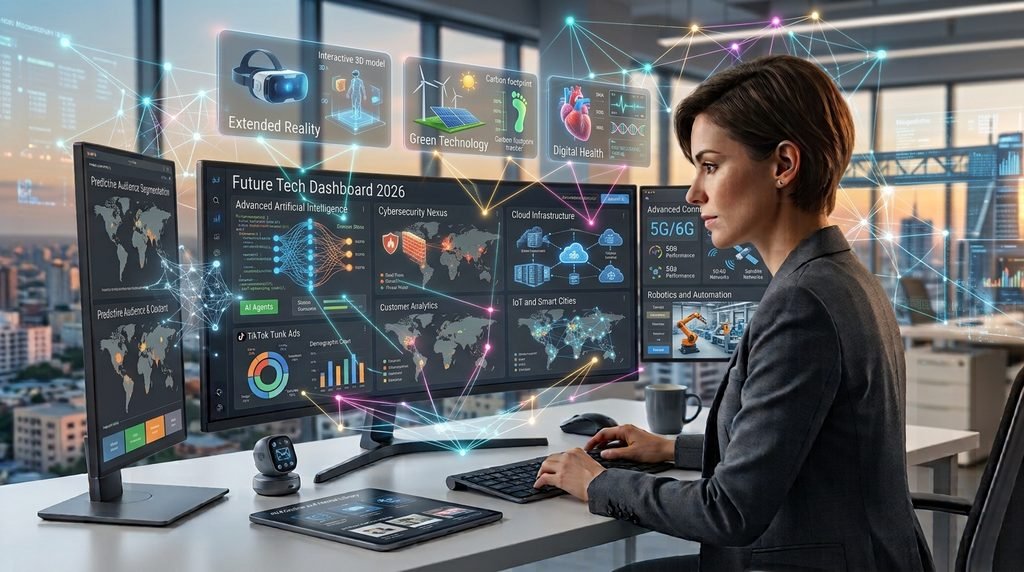
Technology Trends 2026 are changing how people work, communicate, learn, shop, and use digital services. Artificial intelligence, automation, cybersecurity, smart devices, and other emerging technologies are becoming increasingly important for businesses and consumers.
Technology is developing quickly, but not every new invention will have the same impact. Some technologies are becoming practical tools that businesses and individuals can use today, while others are still developing.
This guide explores some of the important Technology Trends 2026 and explains how they could affect the future.
What Are Technology Trends?
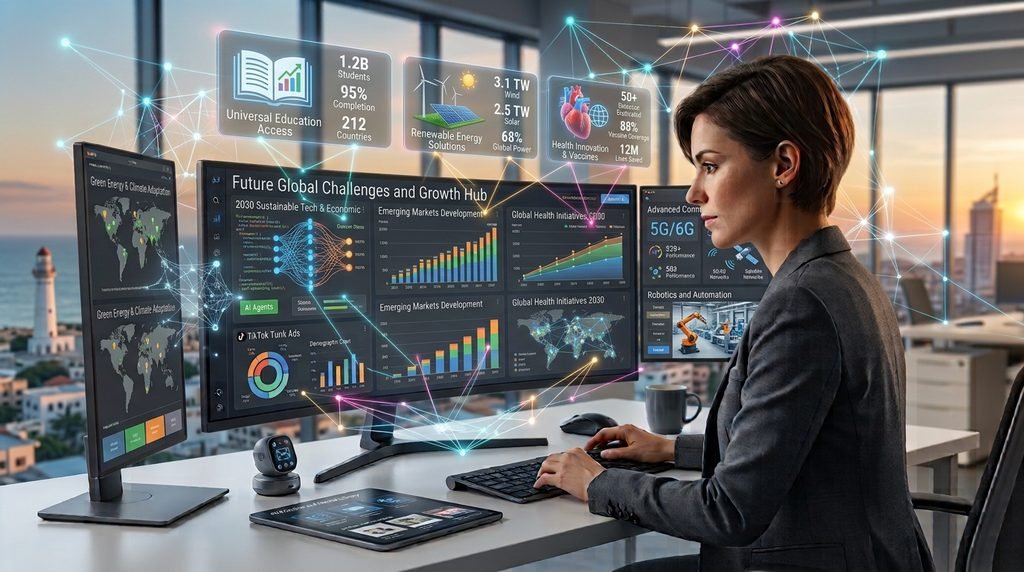
Technology trends are new or rapidly developing technologies, tools, and approaches that are gaining attention and adoption.
A technology trend can start as an experimental idea and later become a widely used product or service.
Examples include:
- Artificial intelligence
- Automation
- Cloud computing
- Cybersecurity
- Internet of Things (IoT)
- Robotics
- Extended reality
- Advanced connectivity
Understanding these trends can help individuals and businesses prepare for changes in the digital world.
1. Artificial Intelligence
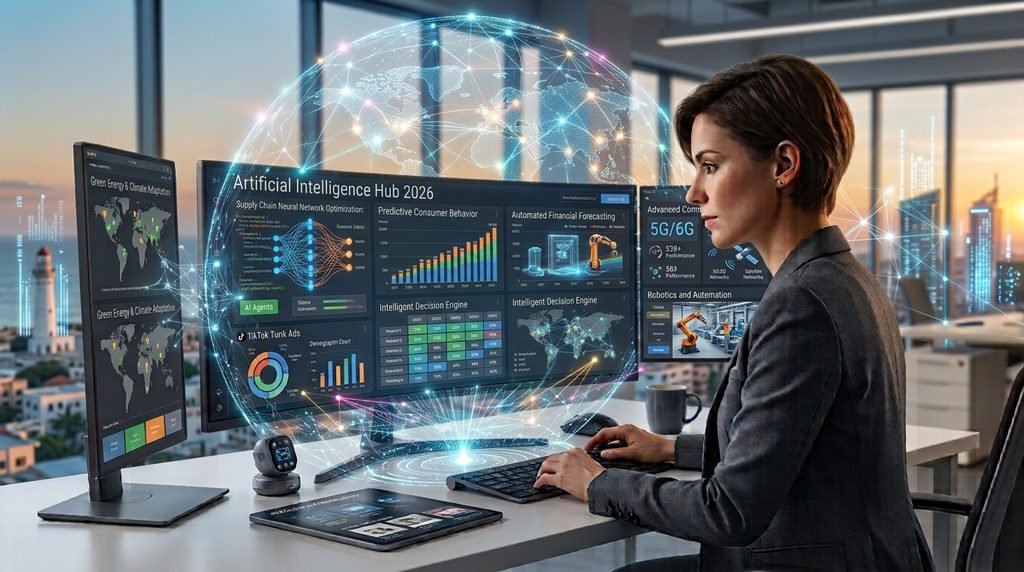
Artificial intelligence continues to be one of the most important areas of technology development.
AI systems can help people perform tasks such as:
- Writing and editing
- Data analysis
- Research
- Customer support
- Image and video creation
- Software development
- Business automation
Generative AI is also changing how people interact with software. Instead of using only traditional menus and commands, users can increasingly communicate with applications through natural language.
For businesses, AI can help automate repetitive work and provide tools for analyzing information and creating content.
However, AI systems still require appropriate human oversight, especially when accuracy, privacy, or important business decisions are involved.
2. AI Agents and Automation
Another important development is the growth of AI systems that can perform multiple steps toward a goal rather than simply answering a single question.
AI-powered agents can potentially help with tasks such as:
- Organizing information
- Managing workflows
- Researching topics
- Handling repetitive processes
- Supporting customer service
- Assisting with business operations
Automation can reduce repetitive manual work and allow people to spend more time on tasks that require judgment and creativity.
The exact capabilities of AI agents continue to develop, so businesses should evaluate tools based on their actual performance and reliability.
3. Cybersecurity
As more personal and business activity moves online, cybersecurity remains an important technology area.
Cybersecurity protects systems, networks, applications, and information from unauthorized access and attacks.
Important cybersecurity practices include:
- Strong passwords
- Multi-factor authentication
- Software updates
- Data backups
- Employee security training
- Access controls
- Monitoring for suspicious activity
AI is also being used in cybersecurity to help identify unusual behavior and potential threats.
At the same time, attackers can use AI to develop more sophisticated techniques, making cybersecurity an ongoing challenge.
4. Internet of Things (IoT)
The Internet of Things refers to physical devices that connect to the internet and exchange data.
Examples include:
- Smart watches
- Smart home devices
- Connected vehicles
- Industrial sensors
- Smart security systems
- Health and fitness devices
IoT allows devices to collect information and communicate with other systems.
For businesses, connected sensors can help monitor equipment, track resources, and identify potential problems.
For consumers, smart devices can make some everyday activities more convenient and automated.
5. Cloud Computing
Cloud computing allows people and organizations to access computing resources, storage, applications, and services through the internet.
Instead of maintaining all computing infrastructure locally, businesses can use cloud services for:
- Data storage
- Software applications
- Website hosting
- Data processing
- Collaboration
- Backup systems
Cloud computing can make it easier for organizations to scale their technology resources as their needs change.
It also supports remote work by allowing teams to access applications and information from different locations.
6. Robotics and Automation
Robotics is another area included in Technology Trends 2026.
Robots are being used in areas such as:
- Manufacturing
- Warehousing
- Logistics
- Agriculture
- Healthcare
- Research
Robotics can be particularly useful for repetitive, dangerous, or highly precise tasks.
Advances in AI are also helping robots interact with changing environments more effectively.
7. Extended Reality
Extended reality includes technologies such as virtual reality (VR), augmented reality (AR), and mixed reality (MR).
These technologies can create or enhance digital experiences.
Potential applications include:
- Education
- Gaming
- Training
- Design
- Retail
- Remote collaboration
- Entertainment
For example, a company could use virtual reality to train employees in a simulated environment without exposing them to real-world risks.
8. Advanced Connectivity
Faster and more reliable connectivity is supporting the growth of digital services.
Mobile networks and other connectivity technologies can support:
- Connected devices
- Cloud applications
- Video communication
- Smart cities
- Remote work
- IoT systems
As connectivity improves, more devices and services can communicate with each other in real time.
This can create new opportunities for businesses and developers.
9. Green Technology
Technology is also playing a role in efforts to reduce energy consumption and environmental impact.
Examples include:
- Renewable energy technologies
- Energy-efficient computing
- Smart energy systems
- Electric vehicles
- Battery technology
- Sustainable data centers
Businesses are increasingly considering energy efficiency when designing and operating technology infrastructure.
Green technology can therefore become important not only for environmental reasons but also for managing long-term energy costs.
10. Digital Health Technology
Technology continues to influence healthcare through digital tools and connected devices.
Examples include:
- Remote consultations
- Wearable devices
- Health monitoring systems
- Digital medical records
- AI-assisted analysis
These technologies can help collect information and support communication between healthcare providers and patients.
However, health technology involves sensitive information, so privacy, security, regulation, and professional oversight remain important.
How Technology Trends 2026 Could Affect Businesses
Businesses can be affected by technology trends in several ways.
Increased Automation
Companies can automate repetitive processes and potentially reduce the time required for routine tasks.
Better Data Analysis
Modern technology can help businesses collect and analyze more information about operations and customers.
New Products and Services
Emerging technologies can create opportunities for businesses to develop new digital products and services.
Changing Customer Expectations
Customers may increasingly expect faster service, personalized experiences, convenient digital tools, and secure online interactions.
How Individuals Can Prepare for Technology Changes
You do not need to learn every new technology.
A practical approach is to focus on technologies that are relevant to your work, business, or interests.
Consider:
- Learning basic AI skills.
- Improving digital literacy.
- Understanding cybersecurity basics.
- Learning how to use cloud-based tools.
- Following important technology developments.
- Developing skills that complement automation.
Technology changes quickly, so continuous learning can be more useful than trying to master every trend at once.
Challenges of New Technology
Technology can create opportunities, but it can also introduce challenges.
Privacy
Connected devices and digital services can collect large amounts of information, making data protection important.
Security
More connected systems can create additional opportunities for cyberattacks.
Skills Gaps
Workers may need to learn new skills as software and automation change existing jobs.
Cost
Some advanced technologies require significant investment in equipment, software, training, or infrastructure.
Reliability
New technologies may still have limitations and should be tested before being used for critical tasks.
What Is the Future of Technology?
The future of technology will likely involve greater integration between AI, cloud computing, connected devices, automation, robotics, and advanced software.
Instead of thinking about these technologies separately, it is useful to consider how they work together.
For example, AI can analyze information collected by IoT devices, cloud platforms can process the data, and automated systems can use the results to perform specific tasks.
This combination could create new ways of working and interacting with technology.
Final Thoughts
Technology Trends 2026 show how quickly the digital world is evolving. AI, AI agents, cybersecurity, IoT, cloud computing, robotics, extended reality, advanced connectivity, green technology, and digital health are all areas worth watching.
The most useful approach is not to follow every trend blindly. Instead, identify technologies that can solve real problems, improve productivity, create opportunities, or provide useful services.
As technology continues to develop, learning how to understand and use new tools responsibly can help individuals and businesses adapt to the future.
Frequently Asked Questions
What are the biggest Technology Trends 2026?
Major technology areas include artificial intelligence, AI agents, cybersecurity, IoT, cloud computing, robotics, extended reality, advanced connectivity, and green technology.
Why are technology trends important?
Technology trends can influence how businesses operate, how people work, and how consumers interact with digital services.
Is AI the most important technology trend in 2026?
AI is one of the major technology areas receiving significant development and adoption, but its importance depends on the specific industry and use case.
How can beginners keep up with technology trends?
Beginners can follow reliable technology news, learn basic digital skills, experiment with useful tools, and focus on technologies relevant to their goals.
Will technology change the way people work?
Technology and automation can change how tasks are performed and what skills are needed. The impact can vary significantly between industries and occupations.